Assistant Professor · School of Computing and Augmented Intelligence · Arizona State University
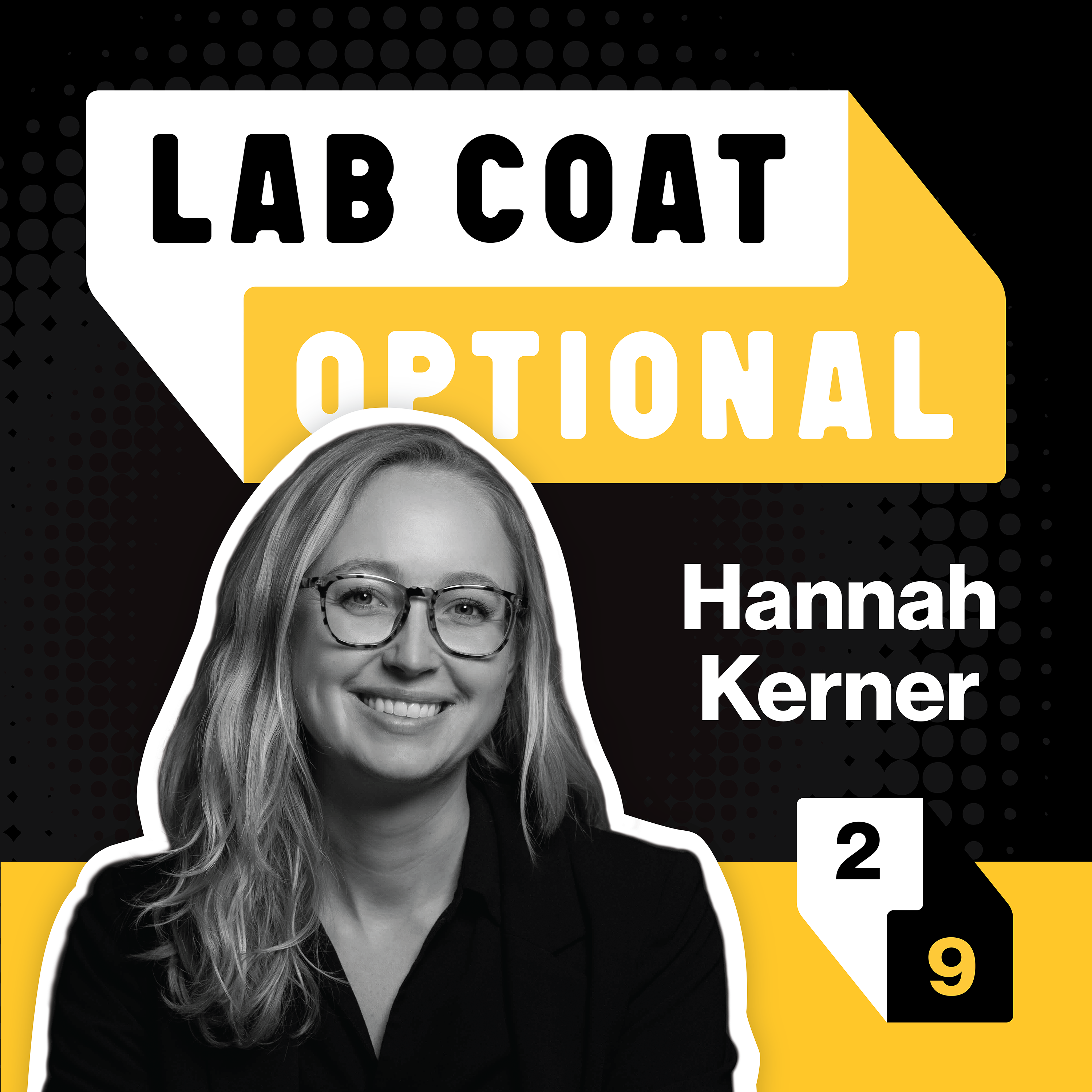
Hannah Kerner is an Assistant Professor in the School of Computing and Augmented Intelligence
at Arizona State University. Her research focuses on advancing the foundations and applications
of machine learning to foster a better future for all.
Her lab's research topics include machine learning for remote sensing, algorithmic bias,
and machine learning theory.
She translates research advances to real-world impact through her
roles as the AI/Machine Learning Lead for NASA Harvest
and NASA Acres,
Center Faculty for the ASU Center for Global Discovery and Conservation Science
(GDCS),
and Research Advisor for Taylor Geospatial.
She has been recognized by multiple research awards including the NSF CAREER Award (2025),
Schmidt Sciences AI2050 Early Career Fellowship (2025), and Forbes 30 Under 30 in Science (2021).
email · Tempe, AZ

ASU News covers the lab's open-source AI ecosystem for mapping global agricultural field boundaries, built with NASA, Microsoft AI for Good, and the Taylor Geospatial Engine. The first global benchmark dataset, pretrained models, and a no-code web explorer are now in the hands of partners across four continents.
Satellite data is a distinct modality with unique spatial, temporal, and spectral structure. We design algorithms, models, datasets, and tools tailored to the unique nature of satellite data.
Aggregate metrics often hide where and why ML models fail. We develop methods, metrics, and benchmarks that surface biases and failure modes in interpretable, actionable ways.
We develop ML systems that learn and predict efficiently without sacrificing generality, and scalable model families that fit a wide range of compute budgets.
If you're interested in any role with the group (postdoc, PhD, MS, visitor, intern, etc.), please use the form below instead of emailing me — I can't reliably respond to individual emails.
Email: email. For lab opportunities, please use the interest forms. Also on Google Scholar, GitHub, LinkedIn, and Twitter.